

Recombinant Human IFNA2 (E. coli)
Cat. No.
Z101585
Unit
Price
$92.00
| Cat. No. | Z101585 |
| Name | Recombinant Human IFNA2 (E. coli) |
| Description | All known subtypes of IFN- alpha show the same antiviral antiparasitic, antiproliferative activities. Human IFN-alpha is also a potent antiviral substance in murine, porcine, and bovine cell systems. IFN-alpha forms are produced by monocytes/macrophages, lymphoblastoid cells, fibroblasts, and a number of different cell types following induction by viruses, nucleic acids, glucocorticoid hormones, and low-molecular weight substances. All IFN-alpha subtypes possess a common conserved sequence region between amino acid positions 115-151 while the amino-terminal ends are variable. Many IFN-alpha subtypes differ in their sequences at only one or two positions. IFN-alpha and IFN-beta are thought to bind to the same receptor. Signal transduction mechanisms elicited after binding of IFN-alpha to its receptors involves tyrosine phosphorylation (see also: PTK; protein tyrosine kinase) of various non-receptor tyrosine kinases belonging to the Janus kinases. |
| Organism | Human (H. sapiens) |
| Unit quantity | 100 µg |
| Family | IL-10/Interferon Family |
| Tag | Tag Free |
| Aliases | IFN-alpha-2, IFN-alphaA, IFNA, IFNA2B, leIF A |
| Gene Symbol | IFNA2 |
| Gene ID | 3440 |
| Accession Number | P01563 |
| Source | E. coli |
| Species | Human (H. sapiens) |
| Appearance | Lyophilized Powder |
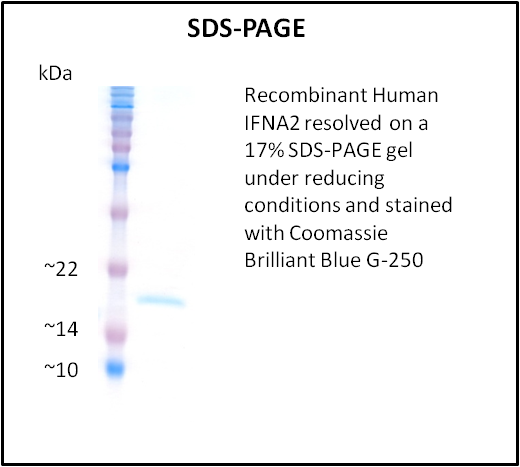
| Molecular Weight | 19 kDa |
| Endotoxin Level | <1.0 EU/µg of recombinant protein as determined by the LAL method. |
| Purity | >95% as determined by SDS-PAGE |
| Formulation | Recombinant Interferon-alpha 2A was lyophilized from a 0.2 μm filtered PBS solution pH 7.0. |
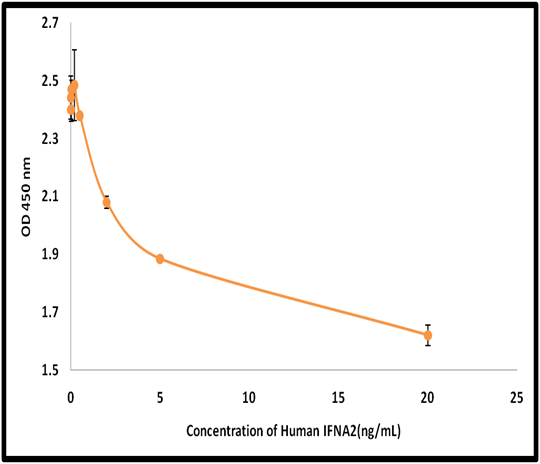
| Function | The ED(50) was determined by the dose-dependent anti-proliferation of Ovcar3 cells and was found to be <20ng/mL. |
| Reconstitution | A quick spin of the vial followed by reconstitution in distilled water to a concentration not less than 0.1 mg/mL. This solution can then be diluted into other buffers. |
| Storage | The lyophilized protein is stable for at least one year from date of receipt at -70°C. Upon reconstitution, this cytokine can be stored in working aliquots at 2° - 8°C for one month, or at -20°C for six months, with a carrier protein without detectable loss of activity. Avoid repeated freeze/thaw cycles. |
| Usage | For research use only. Not for diagnostic or therapeutic use. |
| Material Citation | If use of this material results in a scientific publication, please cite the material in the following manner: Applied Biological Materials Inc, Cat. No. Z101585 |
Print/Download Datasheet
| How do I choose the right growth factor for my experiment? | |
|
| What is the shelf life and storage condition of this product? | |
|
The lyophilized protein is stable for at least one year from date of receipt at -70°C. Upon reconstitution, this cytokine can be stored in working aliquots at 2° - 8°C for one month, or at -20°C for six months, with a carrier protein without detectable loss of activity. Avoid repeated freeze/thaw cycles.
|
There are no references for this product yet!
This product has no review yet.
Controls and Related Product: